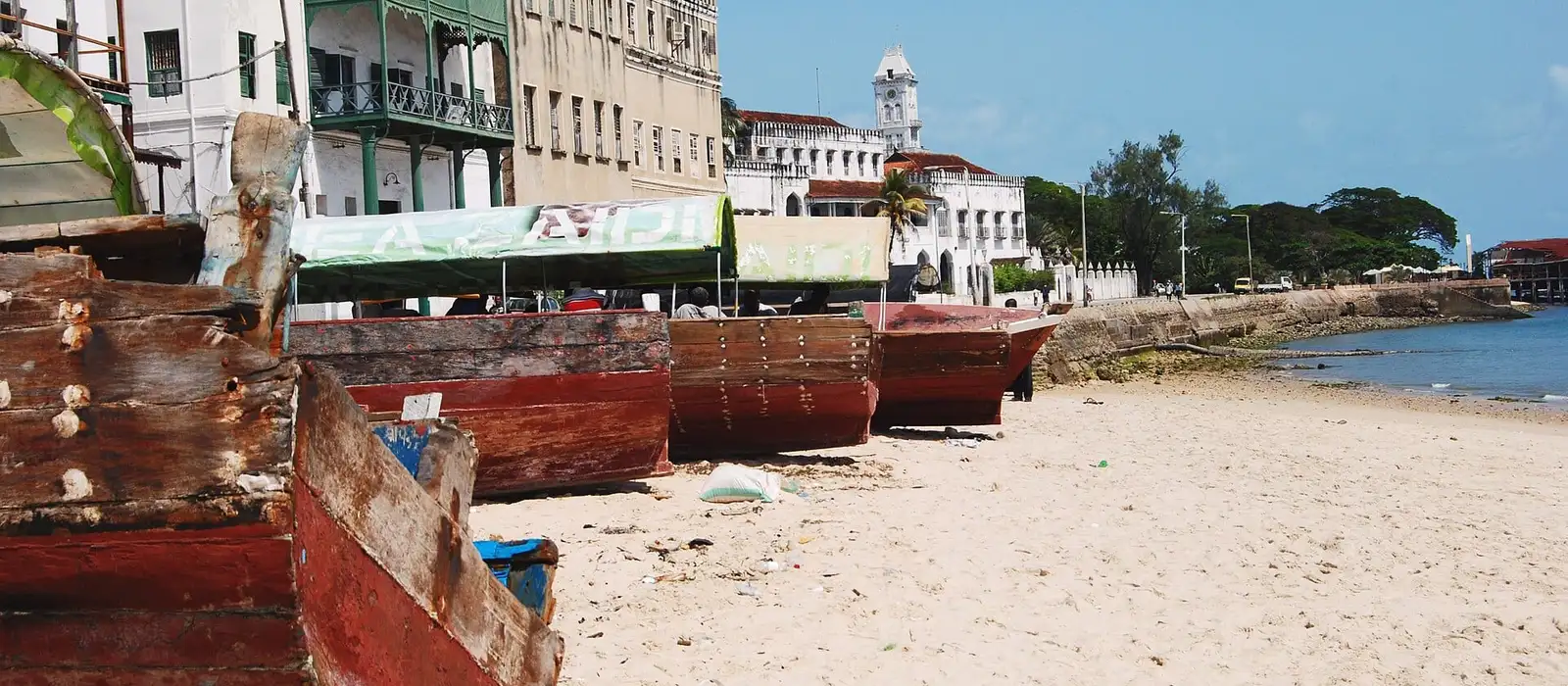
Where Zanzibar is and who it suits
Zanzibar is part of Tanzania. The archipelago includes Unguja and Pemba; this guide focuses on Unguja, which contains Stone Town, the international airport and the beach bases below. Pemba requires its own flight or ferry routing. Zanzibar City is the larger urban area, and Stone Town is its historic core, rather than a separate island or country.
Unguja suits a holiday combining beaches with Indian Ocean trading history, food and a few nature outings. It also pairs with a mainland safari by air. Use the Zanzibar hub for the island and the Tanzania destinations guide for the mainland. A Serengeti camp and a Zanzibar hotel are separate travel segments, so a beach extension needs its own nights after the flight.
Five days can cover the city and one coast. Seven days leave space for a forest visit and a boat trip with a weather alternative. The north and southeast provide different shorelines, but seeing both does not require sleeping in both. The key decision is the beach activity you want to repeat: swimming, kite sessions or quieter time around a tidal lagoon.
Zanzibar travel guide to entry rules and insurance
As of November 2026, visa requirements depend on your passport. Tanzania Immigration directs US tourists to the multiple-entry category; British visitors need the applicable tourist visa and a passport valid for at least six months after arrival, with a blank page. Use the Tanzania Immigration visa guidelines for the passport-specific category. An island stay after a mainland safari is still within Tanzania.
As of November 2026, nonresident US and UK tourists need government-provided inbound insurance for their first port of entry. Zanzibar-first arrivals use Zanzibar Insurance Corporation, ZIC; mainland-first arrivals use National Insurance Corporation, NIC. Under the first-port rule, one policy is required across the two destinations. A personal travel policy does not replace this entry requirement, although it remains relevant to your individual coverage needs.
For policies purchased after October 1, 2026, the first-entry provider determines the process. A Zanzibar policy bought before that date remains usable for a mainland-first arrival under the transition rule. The entry insurance covers the stay up to 92 days. Qualifying travelers from East African Community and Southern African Development Community states have a mainland exemption, but Zanzibar eligibility and charges need separate treatment.
As of November 2026, the standard Zanzibar-first premium is US$44 per adult and US$22 for children ages 3-17. ZIC also lists US$22 for travelers from EAC and SADC member states. The terms for younger children and qualifying regional travelers depend on the insurer’s eligibility categories. Keep the certificate and QR code with your travel documents.
Yellow fever documentation depends on the full arrival and transit route, including travel from a transmission-risk country. A direct flight and an arrival after another African country can have different requirements. Confirm the current visa, insurance and health-entry rules with official authorities before departure. See a travel clinic with both the island and any mainland itinerary.
Arriving by air or from Dar es Salaam
Abeid Amani Karume International Airport, ZNZ, lies about 8-10 km (5-6 miles) south of Stone Town, usually a 15-25-minute drive. It handles international arrivals and domestic flights from the mainland. A Dar es Salaam-Zanzibar flight is approximately 25 minutes in the air, whereas an Arusha-Zanzibar journey is around 80 minutes on a direct routing. Bush services with intermediate stops can take longer.
The Dar es Salaam-Zanzibar fast ferry takes about 1 hour 45 minutes to 2 hours between the city ferry terminals. It arrives at the Stone Town waterfront rather than at the airport. Azam Marine operates the route; weather and the vessel can affect the crossing. Air travel may be quicker port-to-port, but a traveler already in central Dar avoids another airport journey by using the ferry.
As of November 2026, Azam’s booking conditions require the ticket and applicable identity or travel documents. Airport-to-ferry transfers, ticket reporting and disembarkation sit outside the sailing duration. A ferry-to-international-flight connection needs substantially more time than the two-hour crossing alone. An overnight in Dar or on Zanzibar provides more resilience than depending on the last possible sailing.
If you arrive late, Stone Town’s short transfer can preserve the evening and put sightseeing close to your first morning. If the whole holiday is northern beach time, continuing directly to Nungwi avoids a hotel move. The better order follows the purpose of each stay rather than a rule that the city always belongs first.
Getting around: distances and drive times between bases
| Road journey by private car | Approximate distance | Practical drive allowance |
|---|---|---|
| Stone Town-Nungwi | 56 km / 35 miles | 60-90 minutes |
| Stone Town-Kendwa | Around 55 km / 34 miles | 60-90 minutes |
| Stone Town-Paje | Around 50 km / 31 miles | 60-75 minutes |
| Stone Town-Jambiani | 56 km / 35 miles | 60-75 minutes |
| Stone Town-Matemwe | 45 km / 28 miles | 60-75 minutes |
| Stone Town-Michamvi | 66 km / 41 miles | 75-90 minutes |
| Nungwi-Kendwa | About 6 km / 4 miles | 10-15 minutes |
| Paje-Jambiani | Around 7 km / 4 miles, village endpoints vary | 10-20 minutes |
| Nungwi-Paje | Around 88 km / 55 miles | About 1.5-2 hours |
These rounded allowances are longer than some clear-road routing estimates. They exclude a long sightseeing stop and depend on the specific hotel entrances. Stone Town is explored mainly on foot; private transfers are the simpler way to move with luggage between coasts. Dala-dalas, the local shared minibuses, provide a different option with more stopping and waiting.
One transfer between city and beach is enough for a short holiday. Paje and Jambiani are neighboring southeast bases, while a Nungwi-Paje move uses a substantial portion of a day. Adding the northern coast as a quick stop on a southeast transfer produces a different itinerary from a direct city-to-beach drive. The Zanzibar beach comparison helps choose which coast merits the nights.
Things to do in Stone Town and inland
Walk the historic center
Stone Town’s buildings and street pattern record centuries of Indian Ocean trade. A suggested 2-3-hour introductory walk can connect Forodhani Gardens, the Old Fort, the waterfront and carved doors in the lanes. Darajani Market adds a working market setting. Morning offers a useful sightseeing window before the hotter part of the day, and the waterfront provides a separate late-afternoon walk.
The former slave market site deserves its own attention. Its interpretation concerns enslavement, the trade through Zanzibar and abolition, rather than only architectural history. Give the exhibition and surroundings a separate time block instead of squeezing it into a meal stop. UNESCO’s heritage listing and the European Union’s heritage-preservation account provide context for the town and the interpretation project.
Stone Town is also the right base for excursions launched from its waterfront. A Nakupenda sandbank trip generally involves a 20-30-minute boat crossing under suitable conditions, followed by time on exposed sand. The sandbank is tide-dependent and lacks the permanent facilities of a beach resort. A half-day suggestion leaves room for boarding and the return without taking the whole city stay offshore.
Visit a spice farm
Tangawizi operates a spice-farm tour in Dole village, north of Stone Town. The visit introduces plants such as cloves, nutmeg and cinnamon, connecting familiar kitchen ingredients with their living form. Allow roughly 1-2 hours as a suggested farm-visit block, plus transport. It is a practical activity on the town-to-north transfer when the route and start time fit.
A spice visit is not the same outing as Jozani. Dole is on the northern side of the city, whereas Jozani lies toward the southeast. Combining both with a northern hotel move creates extra road travel. On a five-day holiday, one inland stop is usually enough; on a weeklong trip, each can occupy a different part of the stay.
See Jozani forest and the red colobus
Jozani Chwaka Bay is around 35 km (22 miles) southeast of Stone Town, roughly 45-60 minutes by car. It is the principal forest outing for Zanzibar red colobus, an endemic primate. Guided routes also interpret forest habitat and mangroves, with a boardwalk providing a different perspective on the tidal environment. A suggested 1.5-2-hour visit allows time for both forest and mangrove portions when accessible.
The forest fits naturally on a Stone Town-Paje or Jambiani transfer because it lies along the southeastern approach. A morning visit followed by the beach uses the road journey more efficiently than returning from Nungwi. Keep distance from monkeys and follow the guide’s route. The animals are wild, and the purpose is observation in their habitat rather than feeding or handling.
Beach activities that match the base
Nungwi and Kendwa suit a day with swimming and sunset. The west-facing shores generally keep usable water closer than the east-coast reef flats at low tide. Nungwi adds a dhow yard, fish market and turtle projects near the northern tip. A local village morning followed by a western beach afternoon gives the north a land-based day without another island crossing.
Paje suits kitesurfing and a more active lagoon setting. Spring tidal changes can approach 4 meters (13 feet), so a kite lesson depends on both wind and water depth. Jambiani and Bwejuu offer quieter coastal walks around the same broad southeastern tidal environment. A pool makes these bases more flexible for travelers who want a swim when the sea is far out.
Matemwe is a northeastern base for Mnemba-area reef trips. The private island and the surrounding snorkeling water are different destinations, with public excursions generally visiting the reefs. Nungwi-based Spanish Dancer Divers also runs marine outings. A boat day deserves a full morning or longer including preparation, the chosen launch and time in the water.
Michamvi Kae faces the bay and sunset; Pingwe faces the ocean and The Rock restaurant. The same peninsula therefore provides two different shore experiences. A half-day outing can focus on one side, while a visit to both needs a local road move. The Nungwi guide gives northern details and the areas and hotels guide compares all seven bases.
Where to stay on a two-base route
Start in Stone Town for walking sights or an early ferry; start at the beach if that is the holiday’s main purpose and the arrival is convenient. The practical first-trip combination is one city hotel and one beach hotel, with the coast chosen for your main activity. Relative budget tiers describe lodging style, while room rates change by date and meal plan.
- Badolina Bungalows - Nungwi - Budget. Its double, twin and triple room options give a small group a choice of sleeping arrangements in the north.
- New Teddy’s on the Beach - Jambiani - Budget. The hostel offers dorm beds and private rooms on the southeast coast.
- Tembo House Hotel - Stone Town waterfront - Mid-range. The seafront hotel lists twin and double rooms with balconies facing the water.
- Natural Kendwa Villa - Kendwa - Mid-range. Its junior suites give couples a private-room option for the northern beach portion of the trip.
- Zanzibar Serena Hotel - Stone Town waterfront - Luxury. The hotel offers ocean-facing rooms with balconies in the historic town.
- Breezes Beach Club & Spa - Bwejuu Beach - Luxury. Its on-site Water Club runs sailing and guided reef activities from the southeast coast.
Badolina and New Teddy’s provide lower-cost coastal choices on different sides of the island. Tembo and Serena place the city segment on the waterfront, while Natural Kendwa Villa serves the northern coast and Breezes serves Bwejuu. The Water Club at Breezes adds sailing and guided reef activities, making that property useful when staying on the southeast rather than commuting there from the north.
Temperature and rain by month
The table uses historical 1971-2000 climate averages for Zanzibar: typical daily low/high temperature and average days with at least 1 mm of rain. Rain days describe frequency, not monthly rainfall volume or a forecast for your dates. The broad pattern is hotter early in the year, cooler in July-August, long rains around March-May and a wetter spell again late in the year.
| Month | Average low/high, °C | Average low/high, °F, rounded | Rain days |
|---|---|---|---|
| January | 23.3 / 32.1 | 74 / 90 | 7 |
| February | 23.2 / 32.8 | 74 / 91 | 4 |
| March | 23.2 / 32.0 | 74 / 90 | 12 |
| April | 23.6 / 30.3 | 74 / 87 | 17 |
| May | 22.9 / 29.4 | 73 / 85 | 15 |
| June | 21.8 / 29.0 | 71 / 84 | 5 |
| July | 21.0 / 28.6 | 70 / 83 | 5 |
| August | 20.0 / 29.1 | 68 / 84 | 6 |
| September | 19.7 / 30.1 | 67 / 86 | 5 |
| October | 20.6 / 30.9 | 69 / 88 | 7 |
| November | 21.9 / 30.8 | 71 / 87 | 13 |
| December | 22.9 / 31.4 | 73 / 89 | 13 |
June-October and January-February are generally useful drier windows. A monthly rain-day average does not say whether a shower lasts ten minutes or much of an afternoon. Wind and visibility matter separately for diving or a reef boat. For a short holiday, a spare coast day is more useful than treating the calendar as a guarantee that every water activity will run.
Costs and a five- to seven-day outline
As of November 2026, Zanzibar’s infrastructure tax varies by accommodation category: US$5 per person per day for four- and five-star hotels, US$4 for two- and three-star hotels, and US$2 for one-star and other hotels, or the equivalent in Tanzanian shillings. Small-island lodging and underwater rooms have separate US$10 categories. This levy is separate from the government’s entry insurance. The statutory accommodation category determines the charge rather than the relative Budget, Mid-range or Luxury labels used here.
Room and meal choices are the main daily spending decisions. A simple guesthouse with local meals leaves more budget for one boat trip; a resort package makes sense when most meals are on site. Moving hotel repeatedly adds transfer costs and uses time that could be spent at the beach. Park, activity and equipment charges belong in the excursion total.
| Day | Base | Suggested plan | Travel allowance |
|---|---|---|---|
| 1 | Stone Town | Arrival and waterfront | Airport-town about 15-25 minutes |
| 2 | Stone Town | Historic walk and former slave market | Mainly on foot; allow a full morning |
| 3 | Chosen beach | Transfer with one suitable inland stop | Roughly 1-1.5 hours direct; add the visit separately |
| 4 | Same beach | Shore day or main water excursion | Local departure; no hotel move |
| 5 | Same beach or departure | Beach time or flight/ferry transfer | Beach-town/airport generally 1-1.5 hours |
| 6 | Same beach, if staying longer | Forest, kite or reef alternative | Choose the outing nearest the base |
| 7 | Departure | Direct transfer | Allow for airport or ferry formalities separately |
On a five-day trip, choose the city, one inland stop and one coast rather than every named excursion. On a seven-day trip, put the boat earlier in the beach segment and leave another day available. For a history-focused visit, add a second walking morning in Stone Town. After several safari days, a full day with no vehicle transfer can be the most useful part of the extension.
Safety and practical notes
As of November 2026, the US Tanzania advisory advises increased caution and identifies crime and unrest risks. UK advice distinguishes specific regions and covers local customs and transport. Confirm current government guidance and insurance coverage for the complete route before departure. Zanzibar is included in the CDC’s Tanzania health guidance, so bring it to the travel-clinic consultation.
Dress modestly in Stone Town and villages, and use dependable road transport after dark. For a beach or boat day, check the actual tide, currents and sea state with the local provider. Swimmers need separation from kite launches and working boat channels. With the documents settled and one beach base chosen, the remaining flexibility belongs around real weather and water conditions.
Frequently asked questions
How many days do you need for a Zanzibar vacation?
Five days can cover Stone Town and one beach base. Seven days leave time for a forest or spice visit, a water outing and a spare day around sea conditions.
When is the best time to visit Zanzibar?
June-October and January-February are generally drier windows. April-May is usually wetter, and water activities still depend on wind and tide.
Do you need separate insurance to travel to Zanzibar?
As of November 2026, nonresident US and UK tourists need government-provided inbound insurance for their first port of entry. Zanzibar-first arrivals use ZIC and mainland-first arrivals use NIC, with one policy under the first-port rule. Confirm current eligibility before departure.
Is Zanzibar a country or part of Tanzania?
Zanzibar is part of Tanzania and includes Unguja and Pemba. Stone Town and the beach bases in this guide are on Unguja.
Can you visit Zanzibar after a mainland safari?
Yes, with an air connection from the relevant mainland airport or safari airstrip. A direct Arusha-Zanzibar flight is around 80 minutes, with intermediate bush stops potentially adding time.
How long is the Dar es Salaam ferry to Zanzibar?
The fast-ferry crossing is about 2 hours between the city terminals. Boarding, disembarkation and an airport transfer are separate parts of the journey.
Sources
- Stone Town of Zanzibar - UNESCO World Heritage Centre whc.unesco.org
- ZAA Organization Background – Zanzibar Airports Authority zaa.go.tz
- Azam Marine & Kilimanjaro Fast Ferries – Swift and Comfortable azammarine.com
- Tanzania eVisa - Guidelines immigration.go.tz
- Entry requirements - Tanzania travel advice - GOV.UK gov.uk
- INBOUND TRAVEL INSURANCE FOR FOREIGN VISITORS ENTERING MAINLAND TANZANIA | Embassy of Tanzania in Rome, Italy it.tzembassy.go.tz
- inbound-insurance – Zanzibar Insurance Corporation tempweb.zic.co.tz
- Tanzania travel advice - GOV.UK gov.uk
- Safety and security - Tanzania travel advice - GOV.UK gov.uk
- Tanzania, including Zanzibar - Traveler view | Travelers' Health | CDC wwwnc.cdc.gov
- Tanzania Travel Advisory | Travel.State.gov travel.state.gov
- Our Location - Zuri Zanzibar zurizanzibar.com
- Paje Tide Times & Kite Planner | Kite Centre Zanzibar kitecentrezanzibar.com
- Jozani - Chwaka Bay Conservation Area (#) - UNESCO World Heritage Centre whc.unesco.org
- WCS Tanzania > Species > Zanzibar Red Colobus tanzania.wcs.org
- Diving in Zanzibar - Nungwi's Leading Dive Center divinginzanzibar.com
- Nakupenda Sandbank Tour – Rama Zanzibar Beach Tours & Safaris ramazanzibar.com
- New Teddy’s on the Beach Budget Accommodation in Jambiani newteddysonthebeach.com
- Zanzibar Beaches - Visit Zanzibar visitzanzibar.africa
- Infrastructure tax - Zanzibar Revenue Authority website.zanrevenue.org
- General Booking Terms and Conditions – Azam Marine & Kilimanjaro Fast Ferries azammarine.com
- Badolina Bungalows – north-coast rooms and room types badolinabungalows.com
- Tembo House Hotel – Stone Town room types tembohotel.com
- Natural Kendwa Villa – junior suite naturalkendwavilla.com
- Zanzibar Serena Hotel – Stone Town waterfront rooms serenahotels.com
- Breezes Beach Club & Spa – Bwejuu Water Club breezes-zanzibar.com
- European Union Delegation to Tanzania – heritage interpretation at the former slave market eeas.europa.eu
- Tangawizi Tour and Travel – Dole village spice farm tangawizitours.com
- Zanzibar Department of Forestry – Jozani Chwaka Bay National Park maliasilismz.go.tz
- Zanzibar Revenue Authority – Consolidated Infrastructure Tax schedule zanrevenue.org
- Zanzibar Insurance Corporation – September 28, 2026 public notice on first entry and regional exemptions aventura.fi
- Rome2Rio - Stone Town to Nungwi road distance and clear-road estimate rome2rio.com
- Rome2Rio - Stone Town to Kendwa road distance and clear-road estimate rome2rio.com
- Rome2Rio - Stone Town to Paje road distance and clear-road estimate rome2rio.com
- Rome2Rio - Stone Town to Jambiani road distance and clear-road estimate rome2rio.com
- Rome2Rio - Stone Town to Matemwe road distance and clear-road estimate rome2rio.com
- Rome2Rio - Stone Town to Michamvi road distance and clear-road estimate rome2rio.com
- WMO World Weather Information Service - Zanzibar 1971-2000 temperature and rain-day normals worldweather.wmo.int
- Tanzania Specialist - northern/southern safari, airport and domestic flight journey times tanzania-specialist.com
- GoZanzibar Transfers - airport transfer durations by destination gozanzibartransfers.com
- Rome2Rio - Nungwi to Kendwa, Zanzibar North rome2rio.com
- Rome2Rio - Paje to Jambiani rome2rio.com
- Rome2Rio - Nungwi to Paje rome2rio.com
- University of Rhode Island coastal management report - Jozani 35 km location crc.uri.edu
- Zanzibar in One - fast-ferry crossing duration zanzibarone.com