Best places to visit in South Africa: compare 12 choices
Start with the activity you most want from your South Africa vacation. The recommended days below are editorial planning allowances, with transfer days additional unless you use them for sightseeing. “Best months” means the main season for the stated purpose, not that other months are unusable.
Air distances are airport-to-airport, not road mileage; flight times exclude airport formalities and hotel transfers. Road distances end at the named base or gate. These distinctions matter when comparing a nearby wine town with a remote national park.
| Place | Best for | Suggested days | Best months for that purpose | Travel from Cape Town or Johannesburg |
|---|---|---|---|---|
| Cape Town | A varied first visit | 5-7 | October-April for outdoor sightseeing | From JNB to CPT: about 1,270 km (789 miles), 2-2.25 hours flying |
| Cape Winelands | Wine towns and countryside | 2-3 | February-April; September-October | Cape Town to Stellenbosch: about 50 km (31 miles), 45-60 minutes driving |
| Garden Route | Coastal road trip | 5-7 | September-April for warmer outdoor days | Cape Town to Knysna: about 490 km (304 miles), 5.5-6 hours driving |
| Kruger | Wildlife drives | 3-5 | May-September for drier game viewing | Johannesburg to Paul Kruger Gate: about 460 km (286 miles), 5-6 hours driving |
| Drakensberg | Mountain walking | 3-4 | April-May; September-October | Johannesburg to Witsieshoek: about 345 km (214 miles), 4 hours driving |
| Durban/KZN coast | Coastal hotels and warmer-water beaches | 3-5 | April-October for less humid conditions | JNB to DUR: about 478 km (297 miles), 1.25 hours flying |
| Wild Coast | A slower, rural coastal stay | 3-5 | April-September for drier conditions | JNB to Mthatha: about 602 km (374 miles), 1 hour 20 minutes flying, then a coastal transfer |
| Johannesburg | History, art and city life | 2-3 | April-May; September-October | CPT to JNB: about 1,270 km (789 miles), roughly 2-2.25 hours flying |
| Addo | Eastern Cape elephant viewing | 2-3 | May-September for cooler drives; possible year-round | CPT to Gqeberha: about 645 km (401 miles), 1 hour 15-20 minutes flying, then road transfer |
| West Coast | Flowers, lagoon and small towns | 2-3 | August-September for flowers | Cape Town to Langebaan: about 125 km (78 miles), 1.5 hours driving |
| Kgalagadi | Arid-land wildlife | 4-6 | May-September for cooler conditions | CPT to Upington: about 668 km (415 miles), 1 hour 15 minutes flying, then road transfer |
| Panorama Route | Canyon viewpoints and waterfalls | 2-3 | May-September for drier visibility | Johannesburg to Graskop: about 392 km (244 miles), 4.5-5 hours driving |
Cape Town: the strongest all-round first base
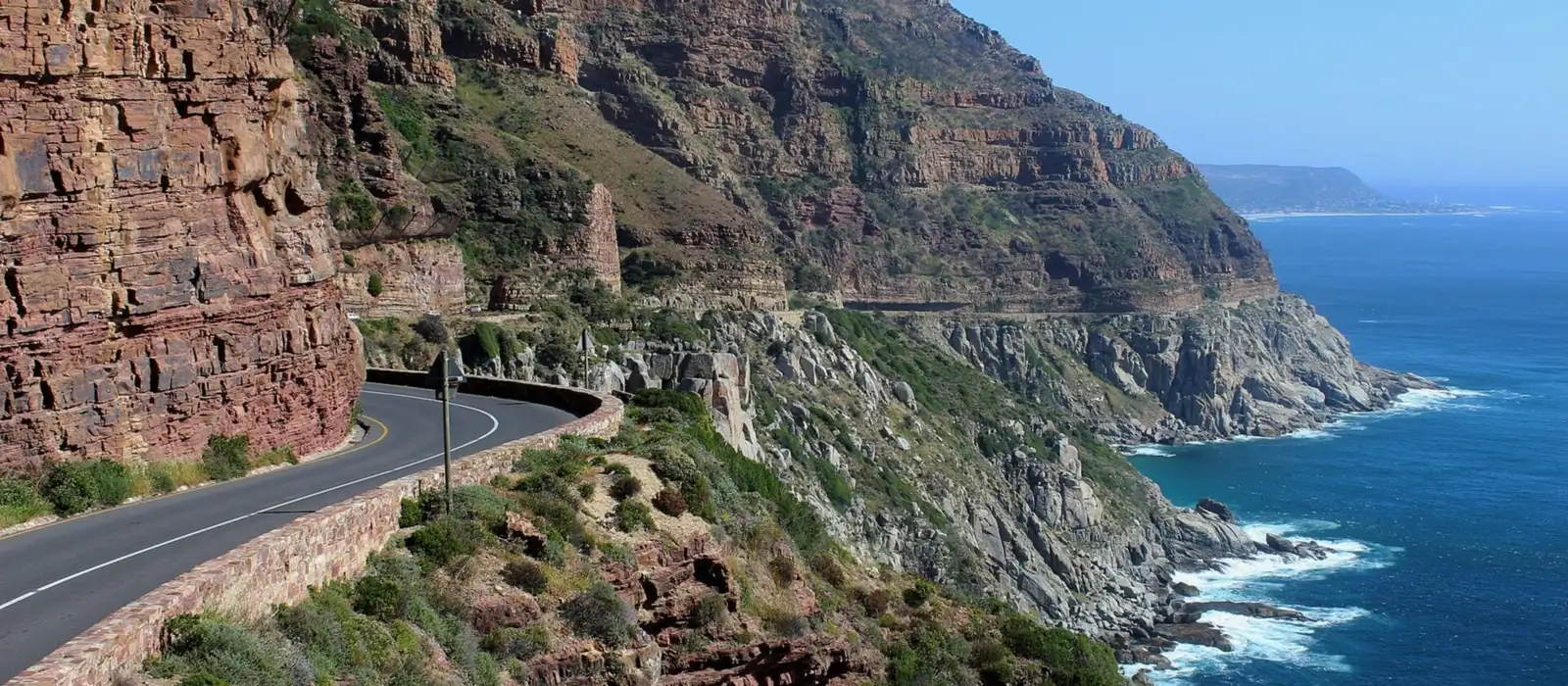
Cape Town combines a mountain, political history, beaches and the Cape Peninsula from one main base. Give Table Mountain and Robben Island separate weather-sensitive slots, then dedicate a full day to Cape Point, Chapman’s Peak and Boulders Beach. Five to seven days gives those plans room to move.
October-April is the useful broad window for outdoor sightseeing, with December-February the core summer season. Wind can still interrupt both ferries and the cableway. Choosing Cape Town for good weather means accepting that the individual day still determines which outdoor outing works.
From Johannesburg’s OR Tambo airport, the flight to Cape Town covers about 1,270 km (789 miles) and is scheduled around two to 2.25 hours. Add the transfer from CPT to your neighborhood. The Cape Town travel guide explains why a City Bowl, Waterfront or Atlantic Seaboard base serves different routines.
Cape Winelands: a short road transfer with a different pace
Stellenbosch and Franschhoek provide wine estates, restaurants, historical town centers and countryside accommodation. Two or three days lets you spend time in a town as well as at tastings. A day trip is possible, but an overnight stay removes the pressure to return to Cape Town immediately after dinner.
Stellenbosch is about 50 km (31 miles) from Cape Town, with a 45-60 minute driving allowance. Franschhoek lies farther east; use the actual town and accommodation address when arranging the transfer. A driver or guided tasting outing makes more sense than planning to drive yourself between alcoholic tastings.
February-April suits harvest-season interest, while September-October brings spring conditions. The appeal is not limited to wine: historical streets and countryside walks can support a slower break. Keep the number of tastings manageable so the itinerary includes the towns themselves.
Garden Route: use several nights for the coastline
The Garden Route combines coastal towns, forests, lagoons and walking stops. Knysna provides a useful central base, with George to the west and Plettenberg Bay to the east. Five to seven days allows a road-trip rhythm with more than one night in the places you most want to explore.
Cape Town to Knysna is roughly 490 km (304 miles) by road. Allow 5.5-6 hours before long sightseeing stops, and longer if you want the transfer itself to be a scenic travel day. Knysna is also about 35 km (22 miles) from Plettenberg Bay, illustrating how the route is a region rather than one resort.
September-April suits warmer outdoor plans, but rain is possible in every season. Winter can still support a quieter trip with walks and town visits between weather systems. Choose the route for varied coastal days rather than an expectation of guaranteed swimming at every stop.
Kruger: give wildlife viewing repeated mornings
Kruger suits travelers who want several wildlife drives, either self-driven within the national park or through a guided arrangement. Three to five days gives you repeated morning and afternoon opportunities. It also reduces the temptation to judge the safari by one rushed drive after a long transfer.
Paul Kruger Gate is approximately 460 km (286 miles) from Johannesburg, with a five- to six-hour road allowance. Skukuza is another 12 km (7 miles) inside, taking around 30 minutes under park driving conditions. Other gates lead to different routes and camps; “arrival at Kruger” is not one fixed endpoint.
May-September is the main dry-season choice for easier visibility and animals concentrating around water. Summer brings green vegetation, heat and storms rather than a failed safari season. Use SANParks’ gate information to match the road journey to the camp, and the safari planning guide to compare booking models.
Phabeni offers an alternative approach of about 430 km (267 miles) from Johannesburg, but Skukuza then lies 39 km (24 miles) inside, with roughly 1.75 hours allowed for that park drive. A shorter highway approach therefore does not automatically mean an earlier arrival at your booked camp.
Drakensberg: choose the walk before the region
The Drakensberg suits travelers who want walking rather than another safari or beach hotel. The northern Berg provides Amphitheatre views and the Tugela routes, while Cathedral Peak and Champagne Valley offer central-Berg gorge and waterfall walks. Underberg and the Sani foothills serve a separate southern itinerary.
From Johannesburg, Witsieshoek is about 345 km (214 miles) and four hours by road. That figure does not represent every mountain hotel. The high Sentinel approach uses Phuthaditjhaba, while the Royal Natal valley route lies on a different access road.
Allow three or four days in one region, favoring April-May or September-October for a first hiking visit. Keep a lower-level option available for poor weather. The Drakensberg hiking guide compares the actual trailheads, distances and ascent figures so you can choose a suitable base.
Durban and the KwaZulu-Natal coast: choose your beach base
Durban provides an urban beachfront and a different coastal climate from Cape Town. Umhlanga favors upscale coastal hotels north of the city, while Ballito works better as its own North Coast stay. Three to five days gives time for the hotel area and a small number of wider outings.
The Johannesburg-King Shaka flight covers approximately 478 km (297 miles) and takes around 1.25 hours. The airport is north of the city, so the road transfer changes significantly between Ballito, Umhlanga and Durban’s central beachfront. Do not compare the flight alone with a complete road journey.
April-October is a useful comfort-focused window with less summer humidity; December-February is hotter and rainier. Coastal water conditions still depend on the day and beach. The Durban hotel guide compares the areas and airport transfers before you commit to a property.
Wild Coast: slow down the transfer and the stay
The Wild Coast suits travelers who want coastal walks, small settlements and more rural surroundings. Coffee Bay and the Hole in the Wall area provide recognizable first-trip anchors. Three to five days is more useful than a single night because access takes time and the attraction is the slower stay itself.
Fly from Johannesburg to Mthatha for the gateway used here: about 602 km (374 miles) and one hour 20 minutes. Coffee Bay is then around 100 km (62 miles) away by road. Allow roughly two hours or more for the coastal transfer, with local road conditions more important than a best-case navigation time.
April-September is the drier-season starting point for walking and access. Use daylight for the final drive and a local guide for unfamiliar coastal routes or crossings. The beaches and river mouths are varied, so a general coastal label should not be taken as a promise of easy swimming everywhere.
Johannesburg: give the country’s recent history space
Johannesburg is worth two or three days for the Apartheid Museum, Constitution Hill, Soweto and contemporary art. It adds a subject that a scenery-and-safari route can otherwise miss. Base yourself in a useful district and use guided or point-to-point transport for the dispersed sights.
From Cape Town, the flight to OR Tambo is roughly 1,270 km (789 miles), with a broad schedule allowance of two to 2.25 hours. Arrival in the airport is still separate from arrival at a Sandton or Rosebank hotel. A late flight followed by an early onward departure leaves little useful city time.
April-May and September-October are useful mild-season choices, while winter is drier and cold at night. Arrange the museum days before locking in a sequence: the Apartheid Museum normally closes on Mondays. The Johannesburg travel guide explains the main transport and neighborhood decisions.
Addo: an Eastern Cape wildlife segment
Addo is useful for travelers who want elephant viewing on an Eastern Cape or Garden Route trip. The main game-viewing section is the obvious first focus, but the wider national park contains separate areas that are not one continuous short drive. Two or three days provides repeated wildlife outings without treating the park as an incidental stop.
From Cape Town, fly approximately 645 km (401 miles) to Gqeberha in around one hour 15-20 minutes. The city-to-Addo Main Camp road segment is approximately 72 km (45 miles) and one hour; allow additional airport collection time. A direct Cape Town drive is a much longer commitment, around nine hours before extended breaks.
May-September offers cooler game-drive conditions, though Addo is possible year-round and rain is spread across the year. Use SANParks’ Addo directions to choose the correct entrance. Main Camp and the southern Matyholweni approach serve different arrival plans.
West Coast: flowers and lagoon country near Cape Town
The West Coast suits a shorter road trip from Cape Town, especially when flower season is the purpose. Langebaan is a useful named base beside the lagoon landscape. Two or three days lets you combine the national park with a small-town stay rather than racing north and south on the same day.
Langebaan is about 125 km (78 miles) from Cape Town; allow around 1.5 hours by road. The exact park entrance and your accommodation can change that final journey. This is one of the more practical additions to a Cape-focused vacation because it does not require a domestic flight.
August-September is the main flower window, with the display dependent on the preceding weather and rain. Postberg access is seasonal rather than an all-year guarantee. A flower trip belongs to a different calendar from a December beach vacation, which is why the purpose of the visit should drive the month choice.
Kgalagadi: commit to the desert journey
Kgalagadi is the option for arid landscapes, open wildlife country and a more remote safari rhythm. Four to six days in the park gives the long approach a purpose. It is a deliberate regional trip rather than a convenient extra night between Cape Town and the Garden Route.
One practical approach is Cape Town to Upington by air, approximately 668 km (415 miles) in one hour 15 minutes. Continue roughly 250 km (155 miles) by road to Twee Rivieren, allowing 2.5-3 hours. Collection, supplies and any onward drive inside the park require additional time.
May-September avoids the most intense summer heat, although winter nights can be very cold. Use SANParks’ Kgalagadi access information to separate ordinary road approaches from routes needing more capable vehicles. Remote conditions make fuel and the exact camp sequence more consequential than on a city itinerary.
Panorama Route: a useful partner to Kruger
The Panorama Route suits canyon viewpoints, waterfalls and a slower approach to the northeastern safari region. Graskop provides a practical starting base for the escarpment sights. The Three Rondavels, Bourke’s Luck Potholes and God’s Window give the route distinct stops rather than one continuous viewing area.
Johannesburg to Graskop is approximately 392 km (244 miles), with a 4.5-5 hour driving allowance. Give the region two or three days if you want time for the viewpoints and waterfalls without a very long return trip. Continuing toward Kruger then becomes a separate, more manageable stage.
May-September favors drier visibility, while the summer-rainfall season can produce fuller waterfalls and more mist. A viewpoint day depends on cloud as much as on the month. Keep the order flexible so a covered escarpment does not force you to spend the whole day waiting at one lookout.
Build a route around the available days
For seven days, choose Cape Town with the Winelands or West Coast, or Johannesburg with one safari region. For ten to fourteen days, Cape Town and Kruger make a varied combination, or follow a Cape-to-Garden-Route journey with an Eastern Cape wildlife segment. These are suggested allocations, not fixed packages.
For a summer-specific route, the South Africa summer guide compares rainfall and temperatures instead of repeating this destination list. As of November 2026, official travel advice highlights high crime levels and risks on isolated roads and beaches. Confirm current government advice and temporary park or road restrictions before travel, then give each long transfer its own realistic place in the itinerary.
Frequently asked questions
What are the best places to visit in South Africa for a first trip?
Cape Town plus either Kruger or the Garden Route gives a useful first combination. Add Johannesburg if history and contemporary city life are important to your trip.
What are good South Africa vacation spots for families?
Cape Town, the Garden Route and the Durban-area coast offer varied family activities. Addo is an option for a wildlife segment on an Eastern Cape route, while a suitable Drakensberg base can support shorter walks.
Can you see the best destinations in South Africa in one week?
One week works better for Cape Town and a nearby region than for a cross-country highlights circuit. Airport transfers and long drives can otherwise consume a large share of the vacation.
Which South Africa destinations combine with Johannesburg?
Kruger and the Panorama Route form a practical northeastern road-trip combination. The northern Drakensberg is another option, but it is a different direction rather than a nearby extension to every safari.
Where should you travel in South Africa in summer?
Cape Town and the Winelands suit a summer-focused trip, with the Garden Route another coastal option. Durban is hot and humid, while Kruger and the inland northeast experience summer rain and storms.
Sources
- Cape Town Tourism - Peninsula outing capetown.travel
- WMO - Cape Town climate worldweather.wmo.int
- Cape Town road distances to Winelands and West Coast carrentalza.co.za
- Stellenbosch - season planning stellenboschtourism.co.za
- Knysna Tourism - regional geography and access visitknysna.co.za
- Knysna Tourism - seasons visitknysna.co.za
- Cape Town to Knysna road route rome2rio.com
- SANParks - Kruger gate distances sanparks.org
- SANParks - Kruger journey times sanparks.org
- SANParks - Kruger climate sanparks.org
- Witsieshoek - access and distances witsieshoek.co.za
- South African Tourism - Drakensberg winter southafrica.net
- Durban Tourism - areas visitdurban.travel
- Durban monthly climate outmazedtourism.com
- Wild Coast - seasonal conditions safarissouthafrica.com
- Coffee Shack - Mthatha and Coffee Bay access coffeeshack.co.za
- Apartheid Museum - visitor information apartheidmuseum.org
- Constitution Hill - visitor information constitutionhill.org.za
- WMO - Johannesburg climate worldweather.wmo.int
- SANParks - Addo access and road transfer sanparks.org
- SANParks - Addo climate sanparks.org
- SANParks - West Coast flower season sanparks.org
- SANParks - Kgalagadi access sanparks.org
- SANParks - Kgalagadi climate sanparks.org
- SANParks - Upington to Twee Rivieren distance and time sanparks.org
- South African Tourism - Panorama Route sights southafrica.net
- Panorama Route - seasonal visibility thesouthafricanguide.com
- Johannesburg to Graskop road route rome2rio.com
- JNB-CPT air distance and duration flightconnections.com
- JNB-DUR air distance and duration flightconnections.com
- JNB-UTT air distance and duration flightconnections.com
- CPT-PLZ air distance and duration flightconnections.com
- CPT-UTN air distance and duration flightconnections.com
- FCDO - South Africa safety gov.uk