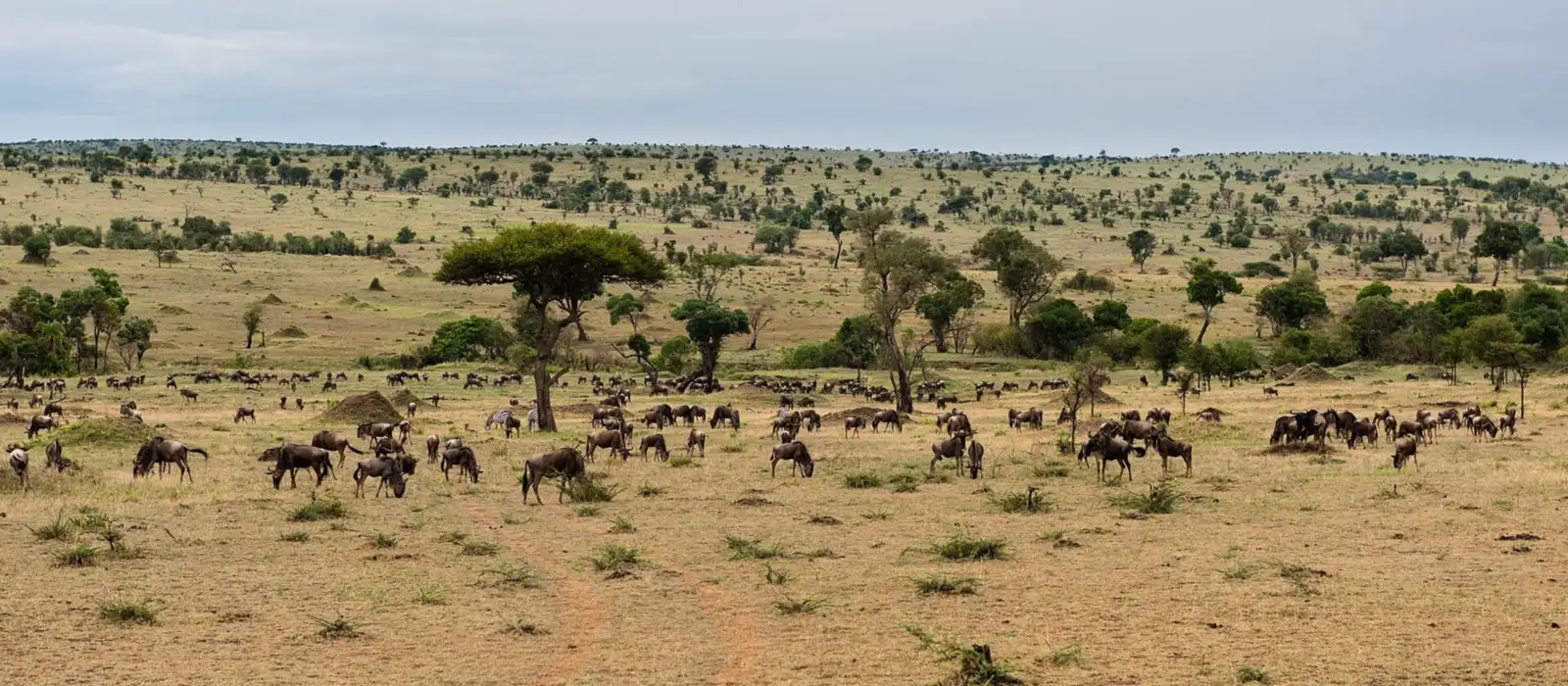
Best places to visit in Africa by trip type
The shortlist covers wildlife, cities, beaches, landscape travel and active outings. Suggested durations describe time at the destination, with international travel and major transfers added separately.
| Destination | Best for | When to consider | Suggested time |
|---|---|---|---|
| Kruger, South Africa | Self-drive wildlife | April–September dry season | 4–5 nights |
| Serengeti, Tanzania | Guided plains safari | May–October dry season | 4 nights |
| Maasai Mara, Kenya | Guided wildlife and migration interest | July–October starting window | 3–4 nights |
| Bwindi, Uganda | Gorilla trekking | June-August; December-February | 3 nights plus approach |
| Cape Town, South Africa | City, mountain and coast | November-March | 4–5 nights |
| Marrakech and Fes, Morocco | Urban heritage | March-May; September-November | 6 nights across two bases |
| Cairo and Luxor, Egypt | Archaeology | October-April | 7 nights across two bases |
| Zanzibar, Tanzania | Island days and Stone Town | June–October or January–February | 5–7 nights |
| Mauritius | A slower island holiday | April-June; September-November | 7 nights |
| Sossusvlei, Namibia | Dunes and desert landscapes | May-September | 2–3 nights |
| Victoria Falls | Waterfall scenery | February-May high flow; June-August clearer views | 2–3 nights |
| Chefchaouen, Morocco | A small walking and culture stay | April-June; September-October | 2 nights |
1. Kruger for a safari you can drive yourself
Choose Kruger when you want control over the pace of a wildlife trip. SANParks provides a network of tourist roads and rest camps, allowing an independent route within a managed national park. You can pause at a waterhole, return to camp for lunch and spend several days in one area.
Gateway: Johannesburg O.R. Tambo (JNB), connecting to Skukuza (SZK) in about one hour. Skukuza is inside the park; Kruger Mpumalanga (MQP) and Hoedspruit (HDS) serve different approaches outside it. April-September is the broad dry window, with June-August afternoons around 25°C (77°F) and cold early drives. The southern camps suit an initial self-drive circuit, while a longer stay can add a central base. The flight reaches an airport, not every lodge sharing the Kruger name, so the selected camp determines the final road leg.
The Kruger-Serengeti comparison explains the rest-camp and guided-camp choices. SANParks visitor guidance covers the slow-driving approach inside the park.
2. The Serengeti for a guided plains safari
Choose the Serengeti when wildlife viewing is the main purpose of the trip and you want a driver-guide to handle the daily decisions. The landscape and seasonal movements reward several nights in the right region. A park name alone does not tell you where a camp is located.
Gateway: Kilimanjaro International (JRO) for the northern Tanzania circuit, followed by a road connection to Arusha or a light-aircraft flight into the park. From Arusha Airport (ARK), scheduled Serengeti services take roughly one hour 10 minutes to two hours depending on airstrip stops. Seronera serves the center; Kogatende serves the northern migration area. May-October is the broad dry-season window, with June-October afternoons near 26°C (79°F). For calving, choose the southern ecosystem in January-March instead of flying to the north simply because it has a famous river.
The Tanzania destination list compares the other northern parks, while Coastal’s Serengeti routes show the difference between the domestic gateways and park airstrips.
3. The Maasai Mara for a focused Kenya wildlife stay
The Maasai Mara is a strong starting point if you want several guided drives from one base. Choose it for open-country wildlife, then compare the reserve and neighboring conservancy arrangements carefully. The place you sleep affects access, driving distances and the activities on offer.
Gateway: Nairobi Jomo Kenyatta (NBO), followed by a city transfer to Wilson Airport (WIL). Light-aircraft services from Wilson to Mara strips take roughly 45-80 minutes, depending on the strip and intermediate landings. July-October is the main migration-focused window, while January-February is another useful drier period for resident wildlife. June-August afternoons average around 25°C (77°F), with mornings near 12°C (54°F). A Mara airstrip and a conservancy are separate location details: Ol Kiombo, Keekorok and Mara Serena serve different camps rather than a single central terminal.
The Kenya destination guide compares the Mara with Amboseli and the coast, which add a different landscape rather than another short stay in similar grassland.
4. Bwindi for a gorilla trekking trip
Bwindi suits travelers whose main reason to travel is a guided gorilla trek. The park has separate trekking sectors. Your lodging needs to match the sector on the permit.
Gateway: Entebbe (EBB). Scheduled flights to Kihihi (KHX) take about one hour 10 minutes, while Kisoro (KXO) serves the southern trekking sectors and can involve a different routing. June-August and December-February are the usual drier trekking windows. Buhoma and Ruhija are northern/eastern sectors; Rushaga and Nkuringo lie in the south. The permit sector determines the useful airstrip and road transfer. A forest trek can take several hours on steep, muddy ground, so three nights is a suggested stay rather than a promise about the trek’s duration.
5. Cape Town for city life and natural scenery
Cape Town is a good choice if you want substantial sightseeing beyond wildlife. Table Mountain, the peninsula and urban neighborhoods give you distinct kinds of days from one base. Choose it when a city stay is a central part of the holiday.
Gateway: Cape Town International (CPT). A nonstop flight from Johannesburg takes about two hours 15 minutes, making a safari-and-city combination possible without an overland crossing of the country. November-March suits outdoor days; December-February daytime temperatures commonly range around 20-26°C (68-79°F). Table Mountain’s highest point is 1,086 m (3,563 ft), while the cableway reaches a lower part of the plateau. Boulders Beach is the African penguin colony on the peninsula, and Kirstenbosch is the botanical garden on the mountain’s eastern slopes. These are separate visits, not stops on one short harbor stroll.
6. Marrakech and Fes for city-and-culture travel
Choose Morocco when you want your days built around medinas, architecture, craft traditions and food. Marrakech and Fes make different contributions to that experience. One offers gardens and varied city districts, while the other rewards a sustained look at its old urban fabric.
Gateways: Marrakech Menara (RAK) and Fes-Saiss (FEZ). London-Marrakech takes around three hours 30 minutes nonstop; a Casablanca-Fes domestic hop is about one hour 10 minutes. March-May and September-November are the main inland walking windows. Marrakech’s whole-day monthly mean is about 17°C (63°F) in March and 22°C (72°F) in October, with warmer afternoons. Jemaa El-Fna and the Koutoubia define Marrakech; Bab Bou Jeloud and craft streets anchor a Fes visit. The conventional rail journey between the cities takes much of a day, so a short holiday works better with one city and a nearer contrast.
The Morocco city comparison includes the intercity rail times and road-only stops. It is the next step for choosing a focused two-base cultural trip.
7. Cairo and Luxor for an archaeology-focused holiday
Choose Egypt’s Nile cities if ancient monuments and museums are the main reason for traveling. Cairo and Giza provide a different group of experiences from Luxor’s temples and west-bank burial sites. Give each area enough time to understand more than its most familiar image.
Gateways: Cairo International (CAI) and Luxor International (LXR). London-Cairo takes about four hours 50 minutes nonstop; Cairo-Luxor is roughly one hour five minutes by air. October-April suits exposed archaeology, while midsummer demands much shorter outdoor periods. Giza’s pyramids and Cairo’s museums need separate time from Luxor’s Karnak precinct, Luxor Temple and the Valley of the Kings. The Avenue of Sphinxes links Luxor Temple with Karnak over about 2.7 km (1.7 miles). Flying between the cities preserves sightseeing time but does not remove either airport’s ground journey.
8. Zanzibar for a safari-and-island combination
Zanzibar works well after a mainland safari if you want a different pace without building another wildlife itinerary. Combine time in Stone Town with one coastal base. The choice of coast matters when you care about swimming, kite lessons or a quieter shoreline.
Gateway: Abeid Amani Karume International (ZNZ). The short hop from Dar es Salaam (DAR) is typically around 20 minutes on direct light-aircraft services, while flights from northern Tanzania have longer routings. June-October and January-February are the main holiday windows. September-April air temperatures are around 26-32°C (79-90°F), falling to about 25-28°C (77-82°F) in May-August. Stone Town is the historic urban stop; Nungwi and Kendwa are northern beach bases, while Paje and Jambiani face the more strongly tidal east coast. One town stay and one beach base avoid repeated cross-island travel.
The Zanzibar beaches comparison explains coast choices. The island’s east and north coasts do not offer the same low-tide swimming experience.
9. Mauritius for a slower island holiday
Mauritius suits travelers who want to make an island the main trip. A week allows time at the coast and selected inland or city outings without moving rooms repeatedly. Choose the coast around the conditions and activities you want.
Gateway: Sir Seewoosagur Ramgoolam International (MRU). Johannesburg-Mauritius takes about four hours nonstop; the westbound return is longer. April-June and September-November are useful all-round choices, with September-November among the driest months. Coastal daytime temperatures are around 28-33°C (82-91°F) in November-April and 22-28°C (72-82°F) in May-October. Le Morne is the peninsula associated with the mountain and kite sports; Blue Bay is a marine-park outing, and Port Louis provides markets and waterfront history. A week at one coast leaves room for these excursions without packing between hotels.
10. Sossusvlei for dunes and desert landscapes
Sossusvlei is the choice here for travelers who want the desert to shape the trip. Namibia’s tourism board describes the clay pan and surrounding dunes as a major southern-region attraction. Make the landscape visit the focus of that portion of the route.
Gateway: Windhoek Hosea Kutako (WDH). A nonstop Johannesburg-Windhoek flight takes about two hours 10 minutes; Sossusvlei then needs a separate overland journey toward Sesriem. May-September offers cooler outdoor days than midsummer. Sossusvlei is a clay pan among high dunes; Deadvlei is the nearby pale pan with dead camel-thorn trees, and Sesriem Canyon is a separate eroded gorge. A dawn dune outing and a later canyon visit are different activities. Two or three nights allows the landscape visit to happen early rather than after a long arrival drive.
11. Victoria Falls for a focused waterfall visit
Victoria Falls can provide a short scenic stay between longer parts of a southern Africa trip. Decide whether your priority is seeing the waterfall, adding a river activity or combining both. The side where you stay and the route you take across the region affect the arrangements.
Gateways: Victoria Falls Airport (VFA) in Zimbabwe and Harry Mwanga Nkumbula Airport (LVI) at Livingstone in Zambia. Johannesburg-Victoria Falls takes about one hour 45 minutes nonstop. February-May usually delivers the strongest water volume, with heavy spray; June-August often balances flow and clearer viewing. Low-water activities generally target later dry-season conditions and have their own operating windows. The falls stretch roughly 1.7 km (1.1 miles) across the Zambezi, so the side, season and viewpoint change what you see. The Zambia-Zimbabwe bridge is also an international border crossing, not simply an extension of the same park path.
12. Chefchaouen for a short walking stay
Chefchaouen fits a traveler who wants a small-scale cultural stop with a mountain setting. Its blue-painted medina offers repeated short walks rather than a continuous sequence of large paid attractions. Give it time to be a place you stay in.
Gateway: Tangier Ibn Battouta (TNG), with London-Tangier flights taking about three hours. The onward city-to-city road leg is about 112 km (70 miles), normally 2-2.5 hours; Fes is about 194 km (121 miles), around 3.5-4 hours. April-June and September-October are the main walking months. The town stands at roughly 600 m (1,969 ft) and began around a fortress in 1471. Ras El Maa is the medina-edge spring, while the Spanish Mosque is an uphill viewpoint reached in about 30 minutes from the spring. The Kasbah adds a garden and museum to the blue-lane walks.
A month-by-month starting point
The temperatures below describe the named destination, rather than an Africa-wide average. Safari and island values are typical daytime conditions; Marrakech values are whole-day monthly means, which include the cooler night. They are climate guides rather than forecasts.
| Month | Destination idea | Representative temperature | Why this period |
|---|---|---|---|
| January | Zanzibar and Stone Town | 26-32°C / 79-90°F daytime | Shorter generally dry island window |
| February | Southern Serengeti ecosystem | Around 27°C / 81°F afternoon | Calving interest on southern plains |
| March | Marrakech | 17°C / 63°F whole-day mean | Inland sightseeing before summer heat |
| April | Mauritius coast | 28-33°C / 82-91°F daytime | Warm sea after summer; rain still possible |
| May | Kruger | Around 28°C / 82°F afternoon | Transition to drier wildlife conditions |
| June | Serengeti | Around 26°C / 79°F afternoon | Central/western migration planning |
| July | Maasai Mara | Around 25°C / 77°F afternoon | Drier period and migration interest |
| August | Maasai Mara | Around 25°C / 77°F afternoon | Northern ecosystem wildlife |
| September | Kruger | Around 28°C / 82°F afternoon | Late dry-season viewing |
| October | Marrakech | 22°C / 72°F whole-day mean | More comfortable city walking |
| November | Mauritius coast | 28-33°C / 82-91°F daytime | Start of summer; relatively dry period |
| December | Zanzibar | 26-32°C / 79-90°F daytime | Warm island days; short rains remain possible |
June is particularly useful when you want wildlife without a northern-winter holiday. Kruger favors the self-drive traveler, while the Serengeti needs a regional camp choice. Neither climate nor a flight time establishes that animals will be beside a particular lodge, so the main destination should match your wildlife interest rather than a single photograph.
Matching the trip to different travelers
For a family, compare the pace and access of the actual activity before choosing the destination. A long drive and a short wildlife stop can feel very different from a morning based close to the park.
For couples or friends with different priorities, choose a base that supports more than one satisfying day. A city-and-coast stay can offer a walk, a cultural visit and time at the water without requiring everyone to join every activity. Compare transport for the person staying behind as well as the people taking an excursion.
Bwindi, Kruger or the Mara for a first wildlife trip
Choose Bwindi if tracking gorillas on foot is the reason for the trip. Pick the trekking sector before you choose a bed. A traveler who prefers to watch from a vehicle has a better fit in Kruger, where a self-drive day lets you linger at a sighting or head back to camp early.
The Maasai Mara suits a traveler who wants a guide to handle the driving and make sense of what happens on the plains. Choose it for several wildlife drives, each with a different chance of seeing animals. If seeing a particular river crossing is the only way the trip will feel worthwhile, a migration itinerary is a risky choice.
Turning the shortlist into your trip
Choose the main activity first, then protect enough nights around it. A gorilla permit, a migration-focused camp or a particular water activity can determine the practical dates. Add a city or island only after checking how you will get there.
As of November 2026, entry requirements and health advice vary by country, passport and transit route. Read the current government guidance for each stop and see a travel clinic with the complete itinerary. The Africa travel guide explains the booking order and how to compare a total trip budget.
The practical gateway pairs are especially useful: JNB-Skukuza for Kruger, Arusha-Seronera for the central Serengeti, Wilson-Mara airstrips for Kenya and Entebbe-Kihihi for northern Bwindi. A camp or trekking sector determines which of those short flights fits the actual activity. Keeping the gateway beside the destination avoids comparing travel times to the wrong side of a large wildlife area.
Frequently asked questions
Where should you go on a first trip to Africa?
Start with the experience that matters most, such as wildlife, architecture or an island stay. Choose one country or a simple two-base route before adding distant destinations.
What are good places to visit in Africa in June?
Kruger and a region-specific Serengeti safari are useful starting points. Compare the type of safari, camp availability and transfer plan for your dates.
Which African vacation is best for beaches?
Zanzibar suits an island extension after a Tanzania safari, while Mauritius works well as a longer island-focused holiday. Pick the coast according to tides, wind and the water activities you want.
How long should an Africa vacation be?
The useful length depends on travel time and the number of bases. Count nights at each destination separately from international flights and major transfers.
Sources
- SANParks – Kruger visitor tips sanparks.org
- SANParks – Kruger climate sanparks.org
- TANAPA – Serengeti visitor brochure tanzaniaparks.go.tz
- Kenya Tourism Board – migration magicalkenya.com
- Uganda Wildlife Authority – Bwindi ugandawildlife.org
- Cape Town Tourism – places for first-time visitors capetown.travel
- Visit Morocco – Fes visitmorocco.com
- Visit Morocco – Marrakech visitmorocco.com
- Visit Morocco – Chefchaouen visitmorocco.com
- Egypt Tourism – Luxor experienceegypt.eg
- Egypt Tourism – Cairo and Giza experienceegypt.eg
- Mauritius Tourism – weather mauritiusnow.com
- Namibia Tourism Board – southern region visitnamibia.com.na
- UNESCO – Mosi-oa-Tunya / Victoria Falls whc.unesco.org
- Zuri Zanzibar – local seasons zurizanzibar.com
- FCDO – Tanzania entry requirements gov.uk
- Airlink Skukuza Airport - scheduled flight durations skukuzaairport.flyairlink.com
- Coastal - Arusha and Kilimanjaro to Serengeti timetable coastal.co.tz
- Safarilink - Maasai Mara airstrips and services flysafarilink.com
- Aerolink Uganda - 2026 timetable storage.aerocrs.com
- Airlink - regional flight journey times flyairlink.com
- Air Mauritius - 2026 Johannesburg timetable my.airmauritius.com
- British Airways - London to Marrakech flight duration britishairways.com
- British Airways - London to Cairo flight duration britishairways.com
- Japan Meteorological Agency - Marrakech monthly normal mean temperature data.jma.go.jp
- SafariBookings and WorldClim - Kruger climate data safaribookings.com
- SafariBookings and WorldClim - Serengeti climate data safaribookings.com
- SafariBookings and WorldClim - Maasai Mara climate data safaribookings.com
- Cape Town Tourism - Table Mountain height and cableway journey capetown.travel
- Cape Town Tourism - seasonal temperatures capetown.travel
- Tonaroz Tours - Chefchaouen elevation, transfers and viewpoint walk tonaroztours.com
- Moroccan Ministry of Culture - Chefchaouen Kasbah history and admission e-services.minculture.gov.ma
- Coastal - September 2026 timetable coastal.co.tz
- FlightConnections - Casablanca to Fes flight duration flightconnections.com
- FlightConnections - Cairo to Luxor flight duration flightconnections.com
- FlightConnections - London Gatwick to Tangier flight duration flightconnections.com
- FlightConnections - Johannesburg to Cape Town flight duration flightconnections.com